
Can purring keep cats calm?
When our co-founder Gemma first came up with the idea for the Purrwave, science was the last thing on her mind. She had one goal: make her elderly and sick cat Frankie feel better, safer, stronger and calmer.
She vaguely knew that cats used purrs to make themselves feel better, and she knew Frankie (left) purred for her when she was ill. So she played a purr on a speaker, and Frankie loved it. Then, when she played a purr on her phone into his carrier at the vet and he instantly stopped yowling, she realised there might be something bigger going on. And she started to research.
That’s where things got interesting.
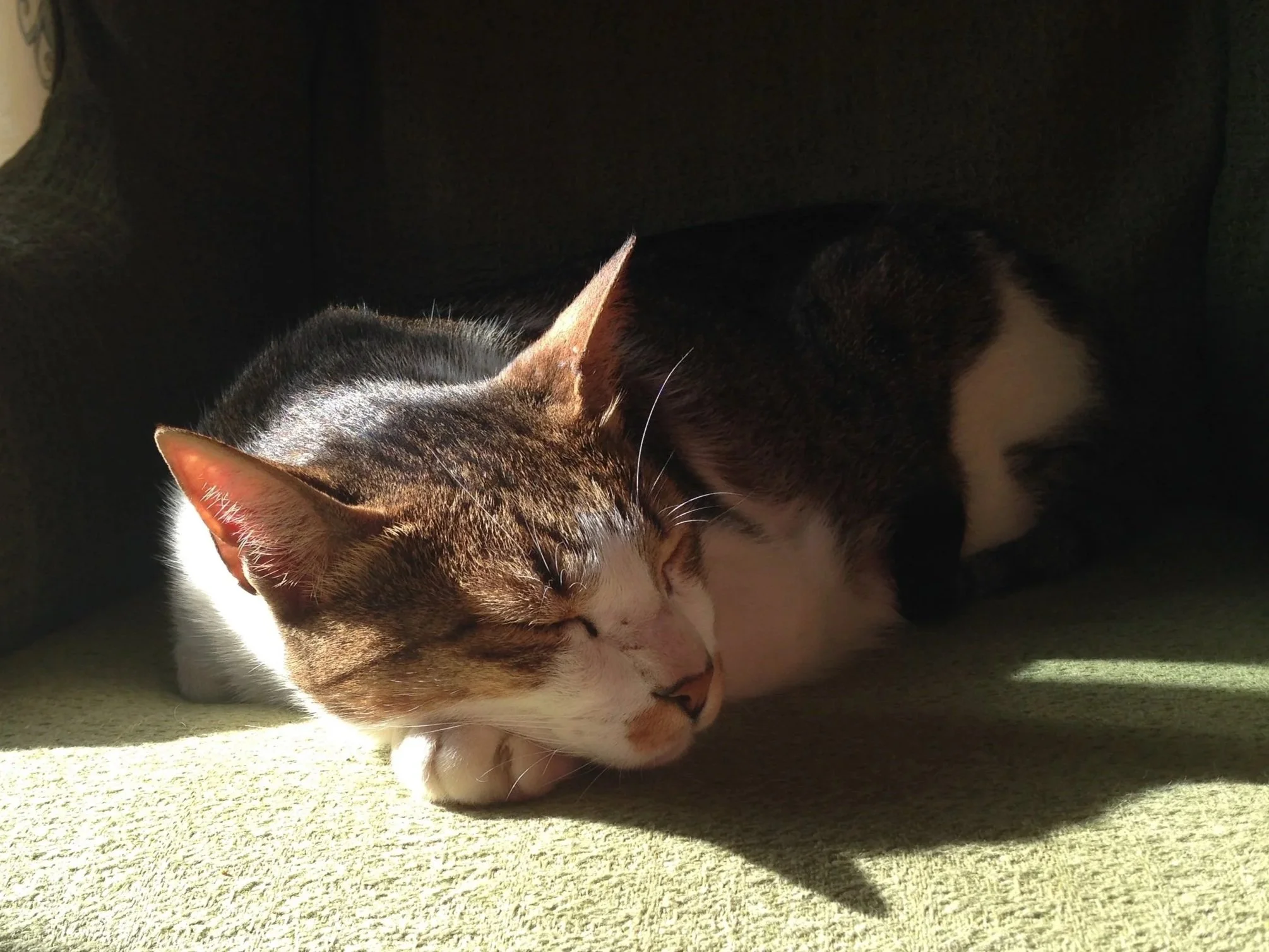
Co-founder Gemma’s late cat Frankie, who was the first to benefit from her purr obsession
Does cat purring really heal humans?
One thing that’s not disputed is that cats purr at 25-150Hz – an extremely low frequency for such a small animal. The view on HOW they purr has developed in recent years, and the latest research by Christian Brandt and his team at the University of Vienna, published in Cell Biology, shows that they have dense pads of connective tissue in their vocal folds, allowing them to produce continuous rumbling sounds at low frequency.
Another thing we know is that these frequencies, especially at the lower end, are used in human medicine to drive bone repair and tissue growth. While these uses are in carefully developed and regulated vibration therapies, and the evidence of cat purrs directly improving human health is purely anecdotal, they certainly give us an indication of the power that purring might hold for felines.
Why do cats purr?
We’re all familiar with that lovely rumble emerging from a happy cat. As a cat parent, you can’t help but feel satisfaction when your brushing or stroking results in a rich purr.
But cats purr at other times, too. They purr when they’re sick or injured, which ties in with the research on bone and tissue repair. The theory is that purring helps them speed up healing.
Mother cats purr when they’re in labour, which is believed to help them with the pain, and kittens purr to let their mothers know where they are. Cats purr when they’re stressed – at the vet, or if they’re frightened – and they sometimes purr to greet each other, and humans. They purr when they’re grooming each other.
And interestingly they have a special ‘solicitation purr’ designed for humans, with a slightly higher frequency note, to manipulate us into feeding them! (We’ve actually found in testing Purrwave that cats really don’t enjoy listening to a solicitation purr, compared to other purrs.)
How do purrs help cats?
We developed Purrwave to speak the language of cats by replicating the soothing, healing feeling they provide for each other and for themselves. So when your cat is at the vet, a familiar purring sound and vibration should make them feel safer. When they’re recovering at home, the purring should help soothe them after all the stress. When they’re being groomed, a purr could give them a sense of calm even if there’s pain. And when they’re hyper after chasing a feather round the room, a purr should calm them and help them chill out with some grooming or sleep.
The Purrwave isn’t a medical device and we don’t claim it can heal injuries – and there’s so much research still to be done on the power of the purr. But we’ve consulted the most important customers of all – the cats – and they’re telling us they love it.
